By Asgard Technologies · Published May 13, 2026 · 22 min read
TL;DR — The customer journey has fragmented from a funnel into a constellation across Google, AI assistants, YouTube, TikTok, Reddit, Maps, LinkedIn, and more. This master class walks you end-to-end through the new map of discovery, an 8-part audit, a 7-step AI Visibility playbook, channel-by-channel tactics, the AI Automation map, and a 90-day implementation roadmap to get your business engineered to be found, engineered to follow up, and engineered to compound.
Why this matters right now
Something quiet is happening underneath the noise of AI hype.
For the last 20 years, business growth had a predictable formula. You built a website, you ranked on Google, you paid for ads when ranking was not enough, and you waited for the phone to ring. SEO agencies sold rankings. PPC agencies sold clicks. Social media agencies sold posts. Everyone stayed in their lane.
That model is breaking apart in real time.
A customer looking for a service today does not just open Google. They might ask ChatGPT for a recommendation. They might watch a YouTube comparison video. They might scroll TikTok for a "day in the life" of someone who already chose a provider. They might post in a Reddit thread asking for advice. They might check Google Maps reviews, then verify the brand on Instagram, then ask Perplexity to summarize the company's reputation, then finally book a call.
The path from awareness to booking is no longer a funnel. It is a constellation.
The agencies running the smartest ads right now (NP Digital, Ignite Visibility, and a handful of others) are signaling something important. The category formerly known as SEO is being rebuilt into something much bigger. They are calling it Search Everywhere Optimization. The AI-specific version is sometimes called Answer Engine Optimization, Generative Engine Optimization, or AI Share of Voice. The labels do not matter. The shift matters.
This master class will walk you through that shift end to end. By the time you finish, you will know how to audit your business against the new landscape, what to fix first, and how to combine visibility with automation so that the leads you earn actually convert into revenue.
Part 1: The new map of customer discovery
Before tactics, you need an accurate map. Here is where customers now look for businesses, ranked roughly by how much weight they carry in 2026.

Google Search still anchors everything. It is the gravity well of intent. But Google itself has changed. AI Overviews now appear above traditional results for most informational and many commercial queries, which means ranking #1 organically is no longer the same prize it used to be. You now compete to be cited inside the AI summary that sits above #1.
Google Maps and the local pack dominate for any business with a physical service area. For local services (legal, medical, home services, treatment centers, restaurants), the Map Pack often gets clicked before the organic results below it.

YouTube is the second largest search engine in the world. People search "best CRM for small business" and "how to choose a personal injury attorney" on YouTube specifically because they want to see and hear a real person, not read a 3,000 word blog post.
ChatGPT, Perplexity, Gemini, Claude, and Copilot are now answer engines that millions of professionals use as a first stop before Google. When someone asks "what is the best addiction treatment center near Los Angeles," the AI's answer (and which brands it cites) shapes the entire short list before the user ever opens a browser tab.
Instagram and TikTok function as discovery engines for younger demographics and for any visually driven category (home goods, fashion, beauty, food, fitness, real estate, travel). Gen Z explicitly reports searching TikTok before Google for restaurants, products, and services.
Reddit has quietly become one of the most trusted sources humans and AI models pull from. Searches ending with "reddit" exploded in 2023 and 2024. Google now surfaces Reddit threads aggressively. LLMs cite Reddit constantly because the content is human and unfiltered.

Pinterest drives an enormous share of intent for home, design, wedding, fashion, fitness, and DIY niches.

Amazon is the default product search engine. If you sell anything physical, Amazon's search ranking is often more important than Google's.
LinkedIn is the discovery and trust layer for B2B. Decision makers research vendors there before any first call.

Industry-specific platforms matter too: Houzz for design, Avvo for legal, Healthgrades for medical, G2 and Capterra for software, Yelp for restaurants.
Your job is no longer to "rank on Google." Your job is to be present, consistent, and credible across the constellation that fits your category. Different industries weight these channels differently. A luxury furniture brand cares heavily about Pinterest and Instagram. A lemon law firm cares about Google, YouTube, Reddit, and AI citations. A B2B SaaS cares about LinkedIn, G2, and AI citations. The principle is universal. The mix is custom.
Part 2: Auditing where you actually stand
You cannot fix what you have not measured. Before you spend a single dollar on visibility work, run this 8-part audit on your business. Score each on a 1 to 10 scale.
1. Google Visibility. Open an incognito window. Search the top 5 keywords your ideal customer would use to find you. Are you on page one? Are you in the Map Pack? Are you in the AI Overview? Do not guess. Look.
2. AI Visibility. Open ChatGPT, Perplexity, Gemini, and Claude in fresh sessions. Ask each one: "What are the best [your category] in [your city or vertical]?" Record exactly which brands they cite. Then ask follow-ups: "Tell me more about [competitor]." See how the AI describes them. Then ask "What about [your company]?" If the answer is sparse, wrong, or worse than what the AI says about your competitors, you have an AI Visibility problem.
3. Competitor Visibility. Identify the three competitors that consistently appear above you across Google, Maps, AI, and social. Note where they are winning. The pattern usually reveals the gap.
4. Website Authority. Check three things: site speed (PageSpeed Insights), structured data (use Google's Rich Results Test), and topical depth (do you have enough content on enough adjacent topics to be considered an authority by both Google and LLMs).
5. Content Gaps. Make a list of the 25 questions your prospects ask in the sales process. Search each one on Google and in ChatGPT. If you do not have content that answers those questions, you are leaving the answers to your competitors.
6. Off-Site Mentions and Citations. Search your brand name in Google. Search it in Reddit, in YouTube, in news. How many third party mentions exist? LLMs heavily weight brand mentions across the open web when deciding who to cite.
7. Automation and Operations. Time how long it takes for a new lead to receive a first response from your business. Industry data is clear: leads contacted within 5 minutes are 9x more likely to convert than leads contacted within an hour. If your team is responding in hours or days, you are bleeding revenue.
8. Conversion Infrastructure. Walk through your own funnel. Submit your own contact form. Sit in your own booking flow. Read your own confirmation emails. Look at your own CRM record. Most businesses discover broken steps within 10 minutes of doing this honestly.
Your total score out of 80 tells you where to start. Below 40, you have foundational work. 40 to 60, you have a competitive base but specific weak points. Above 60, you are in the top decile of small to mid market businesses and your focus should be on compounding advantages.
Part 3: Master class on AI Visibility
This is the newest pillar and the one with the most leverage right now because most of your competitors have not figured it out yet.
How LLMs decide who to cite
Large language models do not "rank" results the way Google does. They generate an answer by pulling from training data plus, in many cases, real time web search. When they need to cite or recommend a business, they are looking at a few signals:
- Brand mentions across the open web. The more often your brand name appears in credible third party content (articles, podcasts, Reddit threads, YouTube descriptions, industry directories), the more "weight" your brand carries in the model's representation of your category.
- Structured, clearly written information on your own site. LLMs favor pages that answer questions directly, use clear headings, and include obvious factual statements. Wall-of-text pages and clever copy lose to plain, answer-shaped writing.
- Schema markup. Organization, LocalBusiness, FAQPage, Product, Service, and Review schema all help machines understand what your site is about.
- Wikipedia, Wikidata, and authoritative directories. Models lean heavily on these.
- Recency. Models with web access reward businesses that publish frequently.
The AI Visibility playbook, step by step
Step 1. Lock down your brand entity. Make sure Google, Bing, and LLMs all agree on basic facts about your business. Set up a complete Google Business Profile. Claim Bing Places. Build out your LinkedIn company page. If you qualify, get listed on Wikipedia (this is harder than people think and requires verifiable third party sources, but it is the single most powerful entity signal). At minimum, create a complete Wikidata entry, which is much easier to qualify for and feeds many AI systems.
Step 2. Rebuild your most important pages in answer-shaped form. Pick your top 10 pages. For each one, restructure with a clear H1, a direct one-paragraph answer in the first 100 words, a FAQ section at the bottom with 5 to 10 real questions, and bullet points that summarize the page. LLMs grab these patterns easily. Customers also read them more easily, so you are not sacrificing anything.
Step 3. Add schema markup to every page. If you are on WordPress, plugins like Rank Math or Yoast handle most of this. If you are on Webflow or custom code, you will need to add JSON-LD blocks manually. At minimum: Organization on the homepage, LocalBusiness if you have a service area, Service schema for each service page, FAQPage for any page with a FAQ section, and Review schema where you have real reviews to display.
Step 4. Build a "questions and answers" content library. Take the 25 questions you identified in your audit. Write a dedicated page or blog post for each one. Title the page exactly as someone would type the question. Answer it in the first paragraph. Then expand into nuance, edge cases, and examples. This is the single highest leverage content move you can make for both Google AI Overviews and LLM citations.
Step 5. Earn third party mentions. Pitch yourself to industry publications. Get on podcasts. Comment thoughtfully (not spammy) on Reddit and Quora in your niche. Submit guest posts. Get quoted in articles via HARO, Connectively, or similar services. The goal is dozens of mentions of your brand name in credible third party content over the next 12 months. Every mention is a vote that the model registers.
Step 6. Monitor and iterate. Tools like Profound, Athena HQ, Otterly, Peec AI, and Goodie are emerging to track LLM citations. You can also build a simple manual tracker by querying the major models weekly with your top 20 prompts and logging who they cite. Adjust your content strategy based on what you find.
Step 7. Refresh and republish. LLMs and Google both reward freshness. Once a quarter, go back through your top 25 pages and update statistics, examples, and dates. This sounds trivial. It has outsized impact.
Part 4: Master class on Search Everywhere
Now expand outward from your owned site into the broader constellation. The principle for each channel is the same: be present, be consistent, be useful. The tactics differ.
Google (still the foundation)
Even in the AI era, Google is the largest single discovery channel for most businesses. The tactical priorities have shifted slightly:
- Optimize for AI Overviews, not just blue links. Pages that win citations in AI Overviews tend to use clear question and answer structure, include data points the model can quote, and have strong topical authority across a cluster of related pages.
- Master local SEO if you serve a geographic area. Complete Google Business Profile, weekly posts, photos every month, response to every review, accurate categories, services and products listed, Q and A populated by you (yes, you can ask and answer your own questions).
- Build a content cluster strategy. Pick 5 to 10 pillar topics. Build a deep page on each one and surround it with 10 to 20 supporting articles that link to the pillar. This is how you signal authority to both Google and LLMs.
YouTube
If you have not started, you are late but not too late. The compounding nature of YouTube means a video uploaded today can still drive traffic in three years.

- Treat each video like a landing page. Title is the keyword. Thumbnail is the conversion element. Description is the SEO content.
- Make three types of content: "what is" videos (top of funnel), "how to" videos (middle of funnel), and "vs" or comparison videos (bottom of funnel where buyers compare options).
- Embed your videos on relevant pages of your site. Dwell time spikes. Conversion rates climb. Google and LLMs both notice.
- Use HeyGen, Synthesia, or similar AI video tools if you are camera shy or low on time. They are not as good as a real person on camera, but they are infinitely better than not publishing.
Instagram and TikTok
These two platforms are now functionally the same thing for business: short vertical video with text overlays.
- Decide on three to five content pillars. For an addiction treatment center, that might be: client transformation stories, day in the life of treatment, education on addiction science, family resources, and behind the scenes of the team.
- Post 3 to 5 times per week minimum. Algorithm rewards consistency more than perfection.
- Lean into faces and voices, not graphics. Humans converting humans, not branded carousels.
- Use captions on every video. Most users watch with sound off.
- Repurpose ruthlessly. One 60 minute podcast can become 20 to 40 short clips with the help of tools like Opus Clip, Descript, or Submagic.
The most underused, highest leverage channel in this list right now.
- Find the 5 to 10 subreddits where your customers actually hang out. Read the rules. Read the culture. Spend two weeks observing before you ever post.
- Be useful, not promotional. The fastest way to get banned is to show up selling. The fastest way to build a moat is to show up as the most useful person in the thread.
- Answer questions in your area of expertise. Mention your business only when directly relevant and only when the subreddit rules allow.
- Reddit posts rank in Google. A well written Reddit post answering a specific question can drive traffic for years.
For visual categories, Pinterest is criminally undervalued.
- Treat pins like SEO assets. Pin titles, descriptions, and board names all matter. Use keywords naturally.
- Pin consistently. 5 to 10 fresh pins per week beats 100 pins one day a month.
- Link every pin to a useful page on your site, not just a product page.
Amazon and product platforms
If you sell physical product, Amazon SEO follows different rules than Google SEO. The mechanics involve listing optimization, A+ Content, review velocity, advertising spend that drives organic ranking, and category-specific factors. This is its own master class. If product is your business, hire or train someone specifically for this.
For B2B, LinkedIn is now where trust is built before the first call.
- Post consistently as a person, not as a company page. Personal profiles get 5 to 10x the reach.
- Three content pillars work well: practical tactics from your industry, opinions and predictions about the industry, and behind the scenes of building your business.
- Engage in the comments on adjacent creators' posts. Reach compounds when other founders see your name everywhere.
Part 5: Master class on AI Automation
Visibility brings the lead in. Automation determines whether the lead converts. Most businesses obsess over the first half and ignore the second half. That is a strategic mistake.

The principle: every repeatable manual task in your business is a candidate for automation. The goal is not to fire your team. The goal is to free your team to do work that requires human judgment, while machines handle work that does not.
The automation map
Think of your business as a series of workflows. The most common ones, in rough order of ROI:
1. Instant lead response. When a form is submitted, an SMS or email goes out within 60 seconds, ideally a personalized one that references what the lead inquired about. Tools: n8n, Make, Zapier, Twilio, plus an LLM call to personalize.
2. Lead routing and qualification. Inbound leads get auto-scored, auto-assigned to the right team member, and pushed into the CRM with all available context (URL they came from, the form they submitted, any enrichment data from Clearbit or Apollo).
3. Follow up sequences. Most leads do not buy on first touch. A 5 to 10 step email and SMS sequence triggered by lead source and behavior dramatically lifts conversion. Combine with phone outreach for high value leads.
4. Calendar and intake automation. Booking link, automatic reminders, intake form sent in advance, no shows triggered into a recovery sequence.
5. Reporting automation. Every Monday morning, the owner gets one email with the numbers that matter: leads, calls booked, calls held, deals closed, revenue, ad spend, top performing channels. Built once, runs forever.
6. Content repurposing. Long form content (podcast episodes, webinars, sales calls with permission) gets transcribed, summarized, and reformatted into blog posts, social posts, email newsletters, and short videos. One piece becomes 10 to 30 distribution assets.
7. Customer service triage. Inbound emails and chats get classified by an LLM, simple questions answered automatically, complex questions routed to humans with a draft response already prepared.
8. Reputation management. New reviews trigger thank you replies (drafted by AI, approved by a human if needed). Negative reviews trigger an immediate alert and a draft response. Review requests go out automatically after service completion.
9. Internal admin. Expense categorization, invoice processing, document tagging, contract redlining, meeting note summarization, CRM data hygiene. The unsexy work that consumes hours weekly.
The build sequence
Do not try to automate everything at once. Sequence matters.
Month 1. Build instant lead response and lead routing. This pays for the rest of the program by itself.
Month 2. Build follow up sequences for the top 3 lead sources. Add calendar automation.
Month 3. Build the weekly reporting automation and the content repurposing pipeline.
Month 4 onward. Layer in customer service triage, reputation management, and internal admin based on which workflows are eating the most hours.
The tooling stack
You do not need 50 tools. You need a core stack that handles 90 percent of cases, plus integrations for the edges.
- Orchestration layer: n8n (self-hosted, flexible, cheap) or Make (no-code, very capable) or Zapier (easiest, most expensive at scale).
- Database layer: Supabase or Airtable depending on team comfort. Supabase wins for anything that needs to scale.
- Communication layer: Twilio for SMS, an email service provider for email, a chat tool that has a usable API.
- LLM layer: Claude, GPT, or Gemini through API. For most workflows, the cost is trivial relative to the time saved.
- CRM layer: HubSpot, Pipedrive, GoHighLevel, or a custom Supabase setup depending on complexity and budget.
- Monitoring layer: A simple dashboard (Retool, internal Next.js app, or even a well structured Google Sheet) that shows what is working and what is broken.
Part 6: The AI Control Panel
Here is the synthesis move that ties everything together.
Most business owners suffer from dashboard fragmentation. Google Analytics is one tab. Google Ads is another. The CRM is another. Klaviyo is another. The reputation tool is another. The accounting software is another. The team's project management tool is another. Nobody has a single place to see what is actually happening across the business.
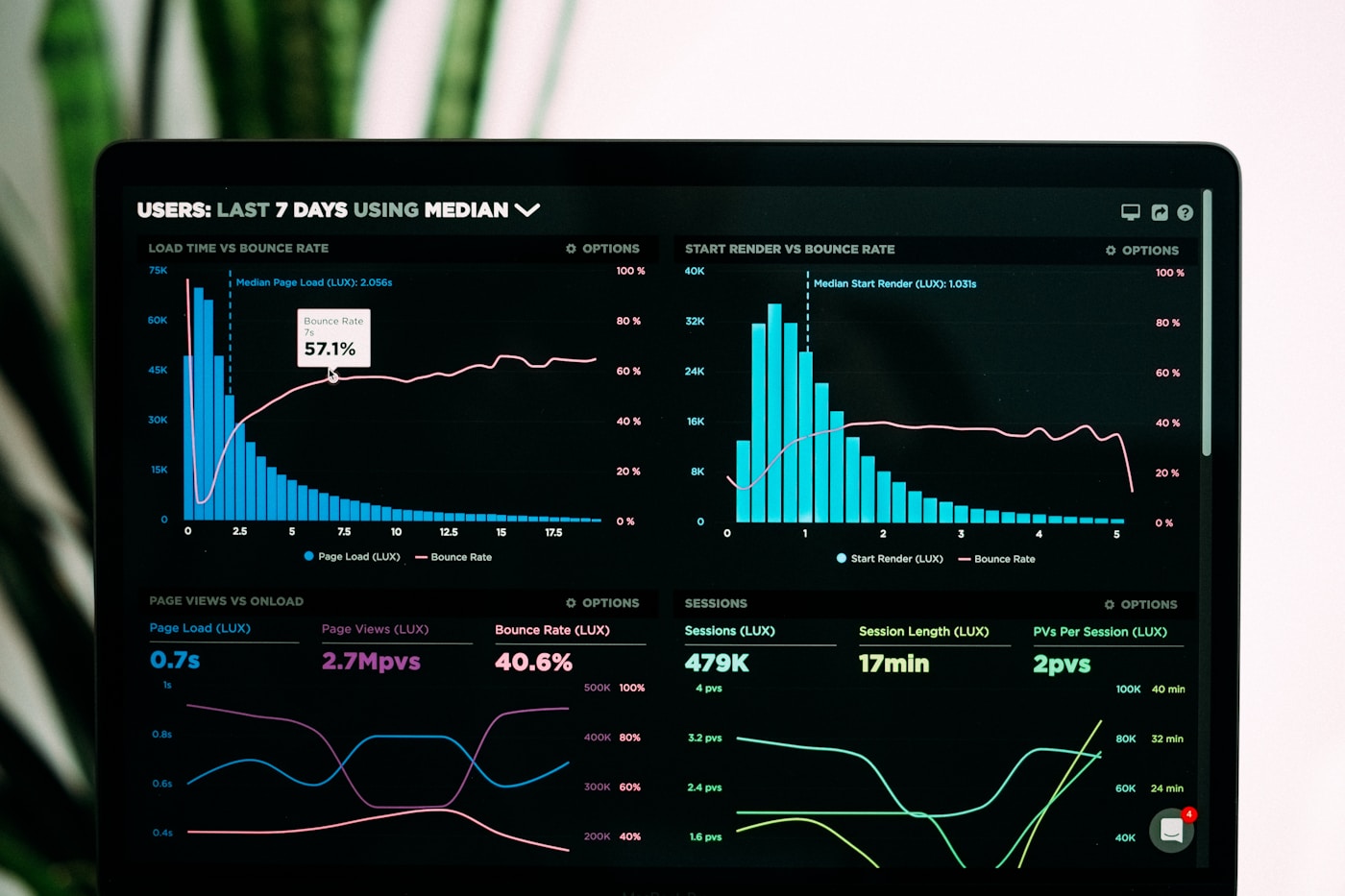
An AI Control Panel solves this. It is one screen that pulls in:
- Leads this week vs last week, by source
- Calls booked, calls held, deals closed
- Revenue this month vs target
- Ad spend by channel and resulting ROAS
- AI Visibility metrics (citation count by model, share of voice trend)
- Search Visibility metrics (rankings on top keywords, Map Pack position, organic traffic)
- Reputation metrics (new reviews, average rating, response rate)
- Operations metrics (lead response time, automation success rate, task backlog)
- AI agent activity (what your automations did this week, what got escalated to humans)
Building one of these used to require a development team. Today, a competent solo operator can ship a working version in 2 to 4 weeks using a combination of Retool or a Next.js front end, Supabase as the database, n8n as the data pipeline, and APIs from the underlying tools.
This is the move that separates a business that does AI work from a business that operates as an AI native company.
Part 7: The 90-day implementation roadmap
If you are a business owner reading this and feeling overwhelmed, here is the order of operations.

Days 1 to 7. Audit. Run the 8-part audit honestly. Identify your top three gaps. Resist the urge to fix everything.
Days 8 to 30. Foundation. Fix your Google Business Profile completely. Add schema to your top 10 pages. Rebuild those pages in answer-shaped form. Build a complete LinkedIn company profile and a complete Wikidata entry. Implement instant lead response.
Days 31 to 60. Content engine. Write or commission 25 questions-and-answers pages addressing the real questions your prospects ask. Publish 3 short videos per week. Post on the two social platforms where your audience actually is. Set up follow up sequences for your top 3 lead sources.
Days 61 to 90. Compounding. Start tracking AI citations weekly. Begin earning third party mentions (HARO, podcasts, guest posts, Reddit participation). Add reputation automation. Set up your first version of the AI Control Panel even if it is rough.
After 90 days, you stop being a business hoping to be found. You start being a business engineered to be found, engineered to follow up, and engineered to compound.
The strategic insight worth holding onto
The market is shifting from "Can you build me a website?" to "Can you make sure my company shows up everywhere customers now search, gets leads, follows up instantly, automates the busywork, and stays competitive in the AI era?"
This is bigger than SEO. It is bigger than AI consulting. It is the operating model for businesses in a world where attention is fragmented and execution is the bottleneck.
Your business should show up everywhere customers search, and operate automatically once they find you. That is the entire game now.
Get the visibility right. Get the automation right. Build the dashboard that lets you see both. The businesses that do this in 2026 will compound advantages that take their competitors years to close.
The window for being early is still open. It will not stay open much longer.
Ready to design your visibility, automation, and AI Control Panel system? Schedule a free consultation and we will map your category's constellation, audit your gaps, and lay out a concrete 90-day roadmap.
Key takeaways
- The customer journey is now a constellation across Google, AI assistants, YouTube, TikTok, Reddit, Maps, LinkedIn — not a linear funnel
- AI assistants (ChatGPT, Perplexity, Gemini, Claude) shape the buyer's short list before they ever reach Google
- Brand mentions across the open web are the single biggest input to whether an LLM will cite you
- Leads contacted within 5 minutes are 9x more likely to convert than leads contacted within an hour
- Visibility brings leads in; automation determines whether they convert — you need both
- An AI Control Panel beats dashboard fragmentation by giving you one live screen for the entire business
- The 90-day roadmap is: audit → foundation → content engine → compounding mentions and tracking
Frequently asked questions
What is "Search Everywhere Optimization" and how is it different from SEO?
Search Everywhere Optimization is the practice of being present, consistent, and credible across every platform your customers now use to find businesses — Google, AI assistants, YouTube, TikTok, Instagram, Reddit, Maps, LinkedIn, Pinterest, Amazon, and industry-specific directories. Traditional SEO focused only on Google blue links. Search Everywhere optimizes for the full constellation of discovery channels, because no single platform owns the buyer journey anymore.
What is AI Visibility (also called AEO or GEO)?
AI Visibility — sometimes called Answer Engine Optimization (AEO), Generative Engine Optimization (GEO), or AI Share of Voice — is the discipline of getting your business cited by ChatGPT, Perplexity, Gemini, Claude, and Copilot when buyers ask category questions. LLMs choose who to cite based on brand mentions across the open web, structured answer-shaped content on your own site, schema markup, authoritative directories like Wikipedia, and recency. This is the single highest-leverage discovery channel right now because most competitors have not figured it out yet.
Which channels should I prioritize first?
Start with Google (Business Profile, AI Overview optimization, schema), then layer on AI Visibility (entity setup, answer-shaped content, third-party mentions), then add the two social or community channels where your specific audience actually spends time. A B2B SaaS leans into LinkedIn, G2, and AI citations. A local service leans into Google Maps, YouTube comparison videos, and Reddit. A visual category (home, fashion, food) leans into Instagram, TikTok, and Pinterest. The principle is universal; the channel mix is custom.
How do I get cited by ChatGPT and other AI assistants?
Five things, in order of impact: (1) Lock down your brand entity — complete Google Business Profile, LinkedIn company page, Wikidata entry, ideally Wikipedia. (2) Rebuild your most important pages in answer-shaped form with clear headings, direct one-paragraph answers, and FAQ sections. (3) Add Organization, LocalBusiness, Service, FAQPage, and Review schema. (4) Earn dozens of brand mentions in third-party content — podcasts, guest posts, Reddit threads, industry publications, HARO quotes. (5) Refresh your top 25 pages quarterly with updated stats and dates so the models see freshness.
What is an AI Control Panel and do I really need one?
Most business owners run their company across 8–12 disconnected dashboards — Google Analytics, Google Ads, CRM, Klaviyo, the reputation tool, accounting, project management, and so on. An AI Control Panel is one screen that pulls in leads by source, calls booked, revenue vs target, ad ROAS, AI citation share of voice, search rankings, lead response time, and what your automations did this week. It used to require a dev team. Today a competent solo operator can ship a working version in 2–4 weeks with Retool or Next.js + Supabase + n8n. It is the move that separates a business that does AI work from a business that operates as AI-native.
How fast does my business need to respond to a new lead?
Industry data is unambiguous: leads contacted within 5 minutes are 9x more likely to convert than leads contacted within an hour. Hours-and-days response times bleed revenue every single day. Instant lead response is the single highest-ROI automation you can build — a form submission triggers a personalized SMS or email within 60 seconds, often with an LLM-personalized opener referencing what the lead inquired about. This pays for the rest of your automation program by itself, usually in the first month.
How long does it take to see results from this strategy?
Days 1–30: Google Business Profile, schema, instant lead response, Wikidata entry — these create immediate lift in conversion and local visibility. Days 31–60: 25 question-and-answer pages, follow-up sequences, and consistent video output start moving rankings and AI citations. Days 61–90: AI citations, third-party mentions, and your AI Control Panel begin compounding. After 90 days you stop being a business hoping to be found and start being a business engineered to be found. The compounding effects continue for years.
Can a small business afford a Search Everywhere + AI Visibility strategy?
Yes — and it is actually cheaper than the old "agency for SEO, agency for ads, agency for social" approach because the underlying tools (Google Business Profile, schema, Wikidata, n8n, Supabase, the LLM APIs) cost almost nothing. The investment is in strategy, content production, and the initial automation build. Most small-to-mid market businesses can stand up the full 90-day roadmap with one operator and one developer for a fraction of what they currently spend on disconnected agencies — and the system keeps producing results long after the build is paid off.